
Ferrero Zhang
California High School, San Ramon, CA, 94582
As the globe faces the challenges initiated by climate change and the exhaustion of fossil fuels, new energy sources are arising to ensure sustainable resources for the future. Among the new energies that receive no attention compared to wind and solar energies is biomass energy, an alternative and renewable form of energy derived from organic materials that produces heat and electricity.
Biomass energy can be derived from plant and animal-based substances like wood chips, agricultural wastes, animal manures, and even gases found in landfills.
Figure 1: Biomass Sources. Source:www.calbiomass.org

All these biological wastes have sun-driven chemical energies stored in their compounds through a process called photosynthesis. Upon combustion, their chemical energies are released in order to produce power for different uses in a production process.
Biomass power plants have a variety of operational designs. In one design, the raw materials are burned in a furnace to heat water in a boiler, generating steam. The steam powers a turbine linked to a generator to make electricity. Another design taps methane gas generated in landfills as a result of decomposed waste. The gas can be harnessed and burned to make electricity. Newer technologies include heating the material by pyrolysis in a low-oxygen atmosphere to create bio-oils, syngas, or biochar, all of which have different uses in energy production.
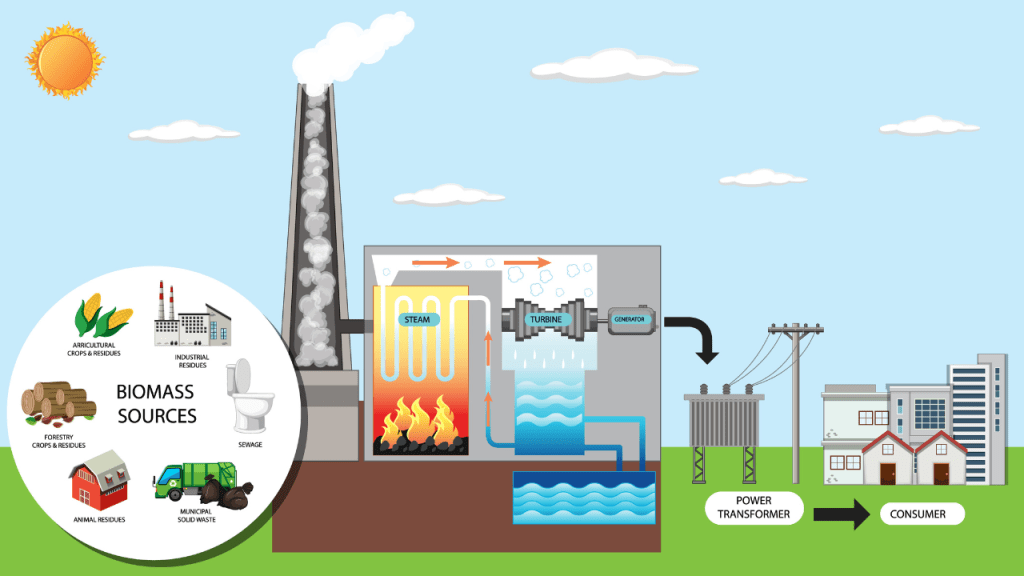
Figure 2: The structure of a modern biomass power plant. Source: http://www.linkedin.com
There are some benefits offered by biomass energy. Firstly, biomass energy is a renewable source because organic materials can be replenished or produced persistently in waste forms. Furthermore, biomass energy can also help with waste management since organic waste materials that could potentially decompose and produce methane, a strong greenhouse gas, are utilized in producing this form of energy. In addition, biomass energy can provide benefits in increasing energy security, particularly in rural areas with ample organic materials, and create employment in harvesting, processing, and plant operation activities. In sustainable harvesting and consumption, biomass energy is potentially a carbon-neutral fuel because its emitted carbon dioxide can be balanced with carbon absorbed from growth.
However, biomass energy also has its downsides. For example, the production of biomass can be at the expense of agricultural land and lead to deforestation if not carried out properly. Burning biomass is also associated with air emissions that can have fatal impacts on air quality and health. Another point is that the efficiency and carbon levels of biomass energy can be largely dependent on whether it is sustainably harvested and converted.
Another factor that may need evaluation is cost and logistics considerations. Although using local waste as feedstock may lower fuel costs, the cost of handling large volumes of biomass feedstock may be high. In addition, the processing of biomass into energy sources such as biofuels or syngas may entail advanced technologies.
Even with these challenges, biomass energy is an important option within the renewable energy sector. Its potential to utilize organic waste as energy, contribute to the economy, and mitigate carbon emissions is an important consideration alongside other renewable energy options such as wind, solar, and more.
References
“Applications of Biomass Energy” Linked In. http://www.linkedin.com/pulse/biomass-energy-part-5-applications-thuanhaicorporation-uabwe
“Biomass Energy” Climate Hubs; U.S. Department of Agriculture. http://www.climatehubs.usda.gov/hubs/international/topic/biomass-energy
“Biomass Energy” SC.GOV. http://www.energy.sc.gov/focus-area/renewable-energy/bioenergy
“What is Biomass Energy” American Biomass Energy Association. http://www.usabiomass.org




Leave a comment