
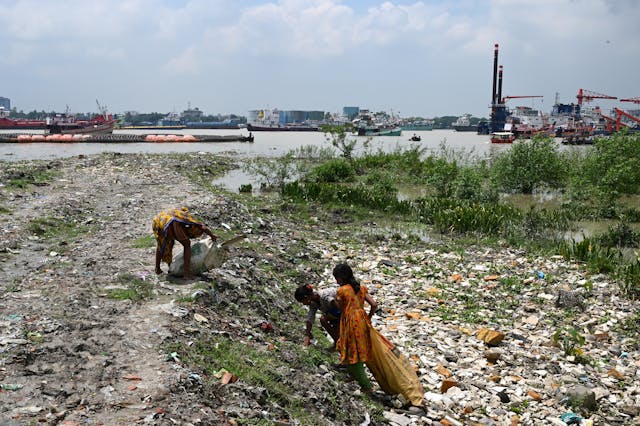
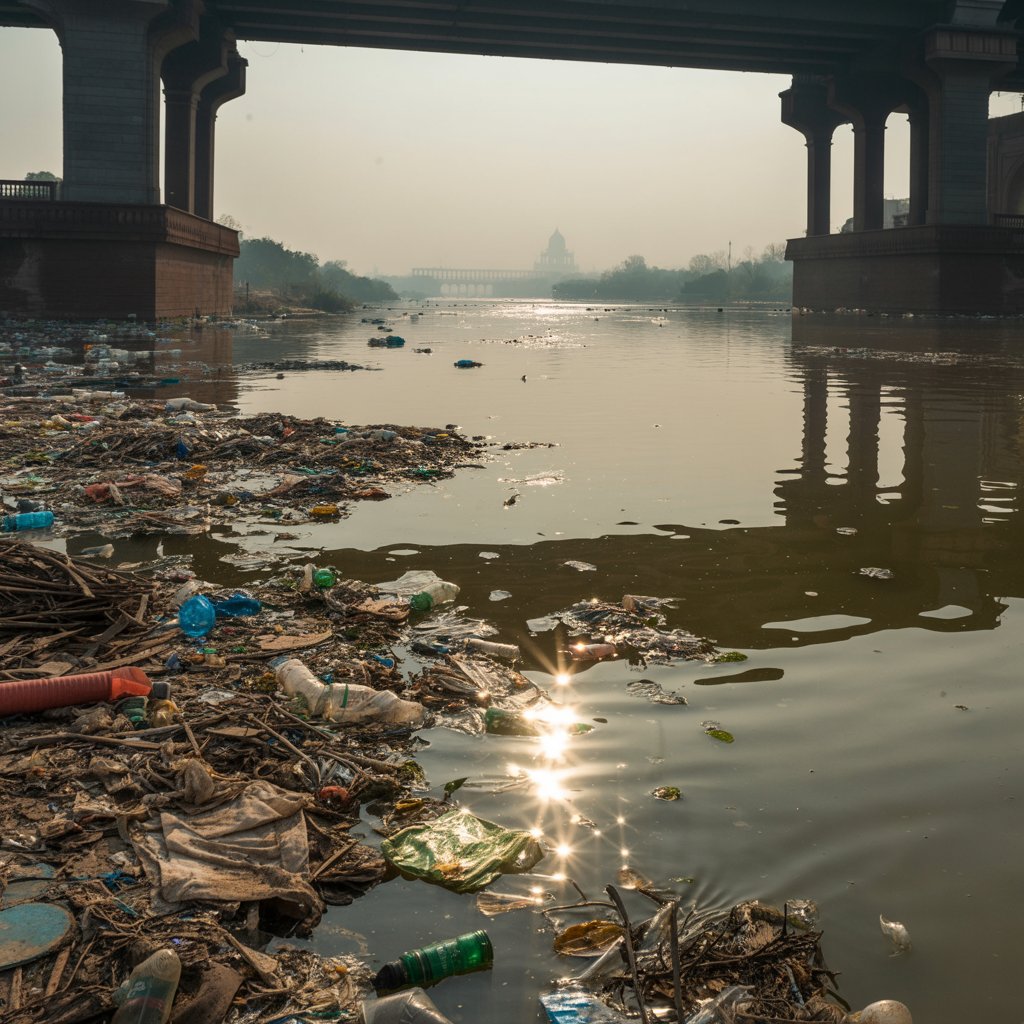
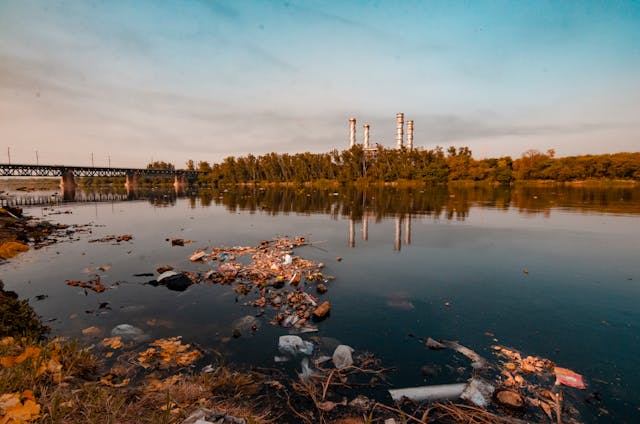
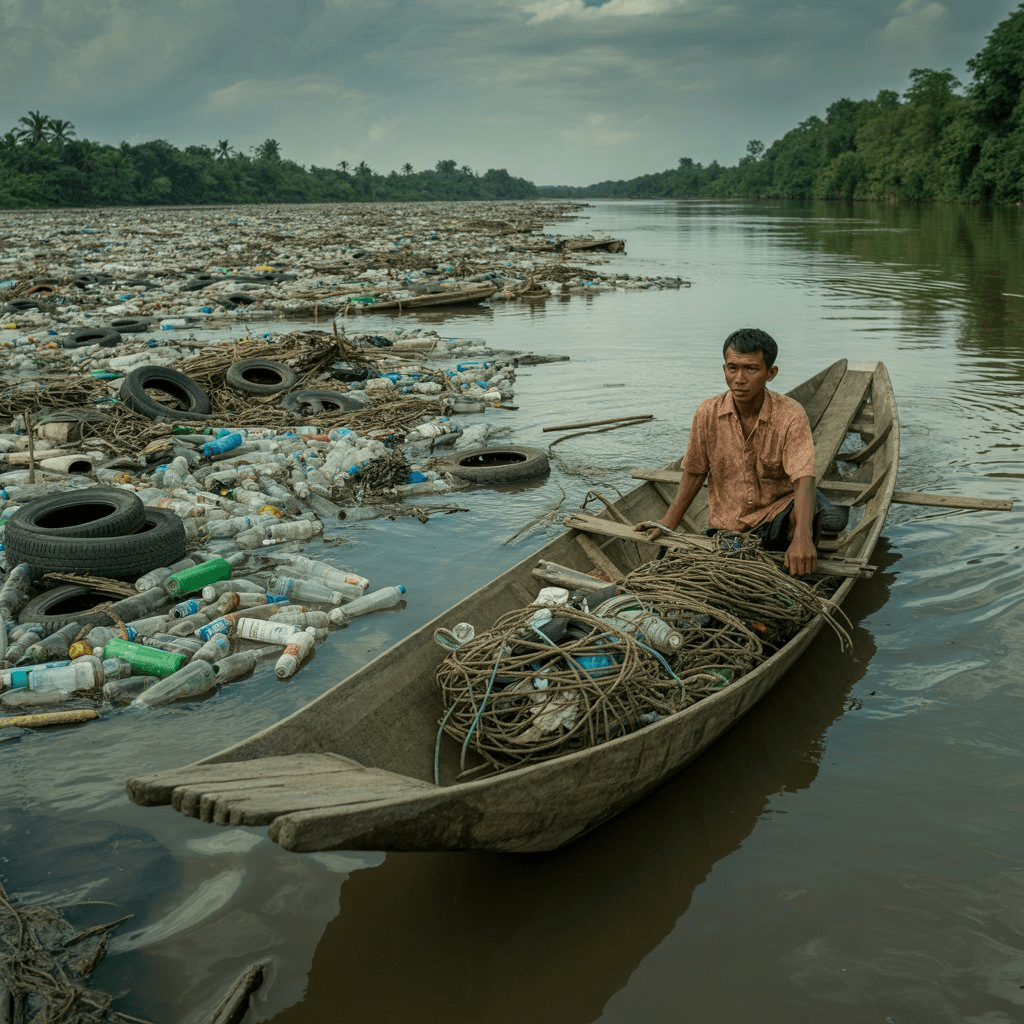
The Buriganga River is heavily polluted by untreated sewage, industrial chemical waste, and massive amounts of solid plastic waste, making its water toxic, smelly, and deadly to aquatic life, and posing severe health risks to nearby populations who still use it.
Key Pollutants
- Heavy Metals: High concentrations of Chromium, Zinc, Lead, Cadmium, Copper, Iron, Mercury, Nickel, Arsenic, and Antimony from industrial discharge.
- Microplastics: Abundant polypropylene and polyethylene fragments, often carrying heavy metals, originating from recycling and molding industries.
- Industrial Chemicals: Epoxy, polyurethane, enamel, hydrochloric acid, alkalis, lime, and caustic soda from factory runoff.
- Organic Waste: Untreated sewage, fabric dyeing byproducts, and general solid waste (plastics, construction debris).
Sources of Pollution
- Textile Industry: A major contributor due to toxic dyes and chemicals discharged without treatment.
- Urban Waste: Direct dumping of solid waste and sewage from Dhaka city.
- Plastic Industry: Recycling and molding operations contribute significantly to microplastic pollution.
Courtesy of http://www.theenvironmentalblog.org

 The Environment Magazine
Leave a comment