
Henry Yao
Dougherty Valley High School, San Ramon, CA 94582
Global warming refers to the gradual increase in Earth’s average surface temperature due to the rising level of greenhouse gases, such as carbon dioxide (CO₂) . One promising approach is Carbon capture and storage (CCS) that can mitigate greenhouse gas emissions. It captures CO₂ released from industrial and energy production processes, preventing it from entering the atmosphere. Once captured, CO₂ is transported and stored in underground formations for long-term containment. Many modern CCS systems can capture up to 90–100% of CO₂ emissions from major sources.
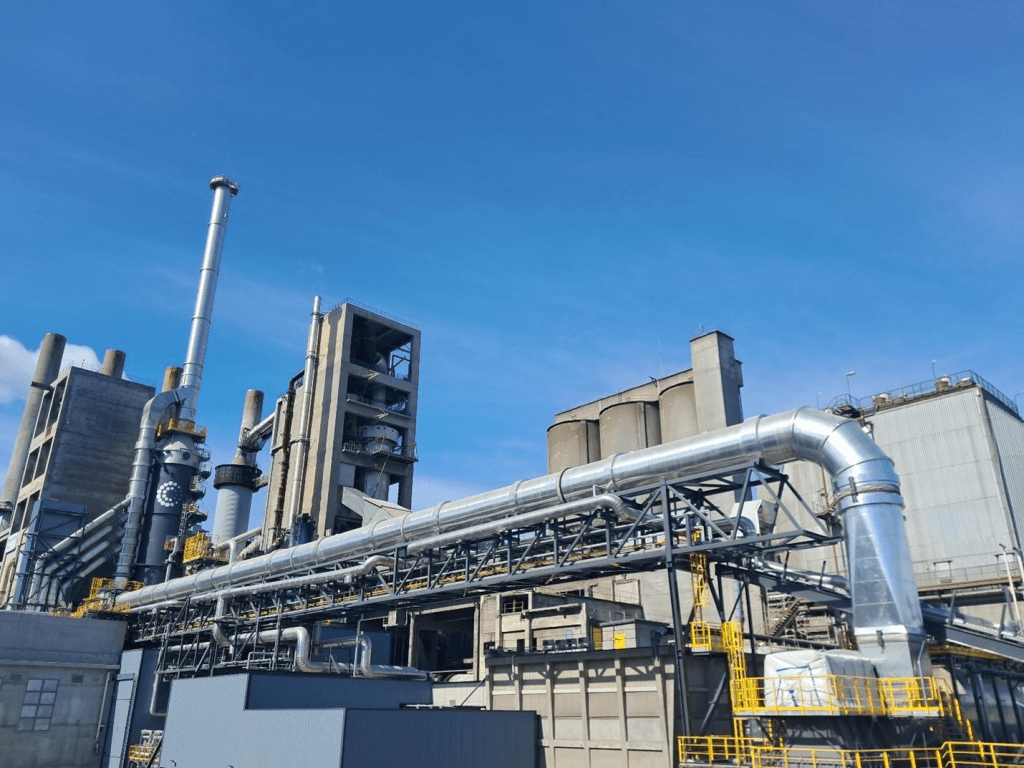
Figure 1: Heidelberg’s Brevik Norway CCUS cement plant. source:www.wri.org
CCS generally involves three main steps: capture, transportation and storage.
- Capture. It is the process of separating CO₂ from other gases produced during fuel combustion or industrial reactions. Three main methods are often used in this step:
- Post-combustion capture, which extracts CO₂ from the flue gas after fuel is burned;
- Pre-combustion capture, which removes CO₂ before combustion, usually by gasifying the fuel;
- Oxy-fuel combustion, which burns fuel in pure oxygen to create a concentrated CO₂ stream.
- Transportation. Once captured, CO₂ is compressed into a dense fluid state for transporting via dedicated pipelines. In some cases, ships or railways are used for transportation.
- Storage: Finally, the CO₂ is injected into deep geological formations, such as depleted oil and gas fields, saline aquifers, or unmineable coal seams, where it can be securely contained for centuries or longer.
Among the three steps, carbon capture is most crucial. It separates carbon dioxide from other gases produced during industrial processes. Most of the large-scale carbon capture and storage projects studied in this report use a capture process, shown in Figure 2. This amine-based capture process was invented almost 100 years ago, and has been used to remove CO2 from natural gas and in a variety of other industrial applications.
This process utilizes amines, one type of organic molecule, that can react with and bind carbon dioxide. The mixed gas is introduced into an “absorber” reactor, where an amine solution flows downward and reacts with the carbon dioxide. The amine solution, containing the bound carbon dioxide, is pumped to another reactor, called a stripper or regenerator, where it is heated to release pure carbon dioxide. The purified gas is then compressed using a special compressor so it can be transported and pumped to the underground storage site.
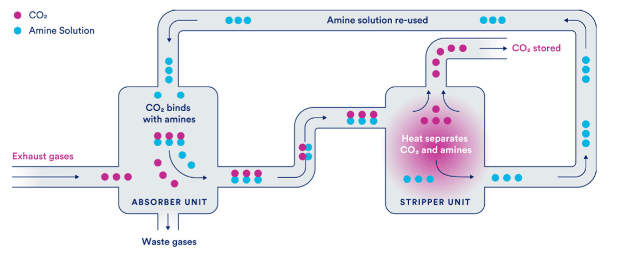
Figure 2: A carbon dioxide capture process using amine absorption technology. Source: http://www.catf.us
To improve the energy efficiency, this process requires a large number of heat exchangers. They are used to heat the amine solution with steam and to transfer heat from hot amine solution to cold amine solution. In the case of high-pressure CO2-containing gas streams, particularly in the petrochemical industry, an alternative technology is used. This technology dissolves CO2 in an organic solvent (such as cold methanol) instead of chemically binding it.
One way to improve CCS is Carbon Capture, Utilization, and Storage (CCUS). In this process, captured CO₂ is used for other industrial processes. Such utilization can offset some of the economic cost of capture and storage. One example is the so-called enhanced oil recovery (EOR), where CO₂ is injected into oil wells to help push out more crude oil. Although EOR can both generate revenue and sequester CO₂ underground, it may encourage the production of more fossil fuels. Some other CO₂ utilization methods do not reduce carbon emission at all. For example, CO₂ used in beverage carbonation is quickly released back into the atmosphere.
CCS is still at its early stage of large-scale adoption. According to the Global CCS Institute’s 2021 Status Report, existing and under-construction facilities had the capacity to capture about 40 million metric tons of CO₂ annually. In that year, 31 commercial-scale CCS projects were either operational or being developed worldwide, including 10 active facilities in the United States. In addition, over 100 additional projects were in planning stages, which could eventually raise global capture capacity to nearly an annual 150 million metric tons. Although these numbers represent significant progress, it is only a tiny portion of total carbon emission. For example, the United States alone emitted over 5 billion metric tons of CO₂ in 2019.
Despite its promise, CCS still faces several challenges before it can make a major contribution to net-zero targets.The most pressing challenge for CCS is its high cost. The capture and compression phases consume large amounts of energy and water, reducing the efficiency of power plants and industrial operations. This “energy penalty” makes CCS less economically attractive without subsidies or carbon pricing. CO₂ must be transported under high pressure and low temperature, so the existing oil and gas pipelines are unsuitable; it is however expensive to build new CO₂ pipeline networks. Even though scientists believe there is enough geological storage capacity globally, potential risks can arise from leakage and induced seismic activity from underground injection.
CCS technologies offer one of the few viable options for reducing emissions in heavy industries and fossil-fuel-based power generation. While it is technically feasible, its success depends on reducing costs, building infrastructure, and earning public trust. CCS is not meant to replace renewable energy or efficiency upgrades, but to work with them to reduce emissions in sectors that are difficult to decarbonize.
References
“Carbon capture and storage: What can we learn from the project track record?” Clean Air Task Force, 31 July, 2024. https://www.catf.us/resource/carbon-capture-storage-what-can-learn-from-project-track-record/
Vincent Gonzales, Alan Krupnick, and Lauren Dunlap. “Carbon Capture and Storage 101.” Resources for the Future, 3 February, 2022. https://www.rff.org/publications/explainers/carbon-capture-and-storage-101/
Katie Lebling, Ankita Gangotra, Karl Hausker and Zachary Byrum. “7 Things to Know About Carbon Capture, Utilization and Sequestration.” World Resources Institute, 16 May, 2025. https://www.wri.org/insights/carbon-capture-technology




 The Environment Magazine
Leave a comment