
Gavin He
Campolindo High School, Lafayette, CA 94556
The convenience, practicality, and affordability of plastic have made it an almost indispensable material that has found its way into nearly every aspect of modern daily life. It is a main component in food packaging, beverages, and other consumer products; the manufacturing of countless consumer goods such as electronics, toys, and furniture; the production of essential household items like containers, utensils, and cleaning supplies; and even the development of industrial materials used in construction, automotive industries, and medical equipment. This has made it increasingly difficult to go through even a single day without seeing or using some form of plastic in the items we purchase, the tools we use, and the services we depend on, demonstrating just how ingrained it has become in modern society.

Figure 1. Plastic Bottles (Source: delano.lu)
Marine ecosystems are among the most significantly impacted environments by the growing issue of plastic pollution, suffering from its devastating consequences that impact wildlife and biodiversity. For example, sea turtles often mistake plastic bags floating in the water for jellyfish, their natural prey, and when they consume these bags, it can lead to fatal blockages in their digestive systems which can cause internal injuries or even death. According to the Center for Biological Diversity, every year, thousands of seabirds, sea turtles, seals, and other marine mammals die after consuming plastic or becoming entangled in it. Among the nearly 700 species affected by plastic pollution are endangered animals like Hawaiian monk seals and Pacific loggerhead sea turtles, which frequently ingest or get trapped in plastic waste.

Figure 2. Sea Turtle and Plastic Bag (Source: wikipedia.org)
The harm even affects birds and other marine creatures, many of which become trapped or entangled in discarded fishing nets, plastic packaging, or other types of debris, often leaving them unable to swim, fly, or feed properly, which results in injury, starvation, or drowning.

Figure 3. Fish Fillet (Source: rawpixel.com)
The issue is not limited to visible pieces of waste; microplastics, which are tiny particles formed by the breakdown of larger plastic items over time, have spread so extensively that they are now found in nearly every part of our planet, from the depths of the ocean to the Arctic ice. These microplastics are eaten by fish, shellfish, and other marine organisms, becoming part of the food chain and eventually reaching humans who eat seafood. This is being constantly seen in fish markets around the world, many fish in the North Pacific ingest 12,000 to 24,000 tons of plastic each year, which can cause intestinal injury and death and transfers plastic up the food chain to bigger fish, marine mammals and human seafood eaters. A recent study found that a quarter of fish at markets in California contained plastic in their guts, mostly in the form of plastic microfibers”(Center for Biological Diversity). This raises serious concerns about the effects on human health and well-being. The presence of plastic pollution in marine ecosystems threatens the balance of these environments, endangering countless species and creating a chain reaction of harm that extends beyond the water.

Figure 4. Fishing Ship (Source: news.uscg.mil)
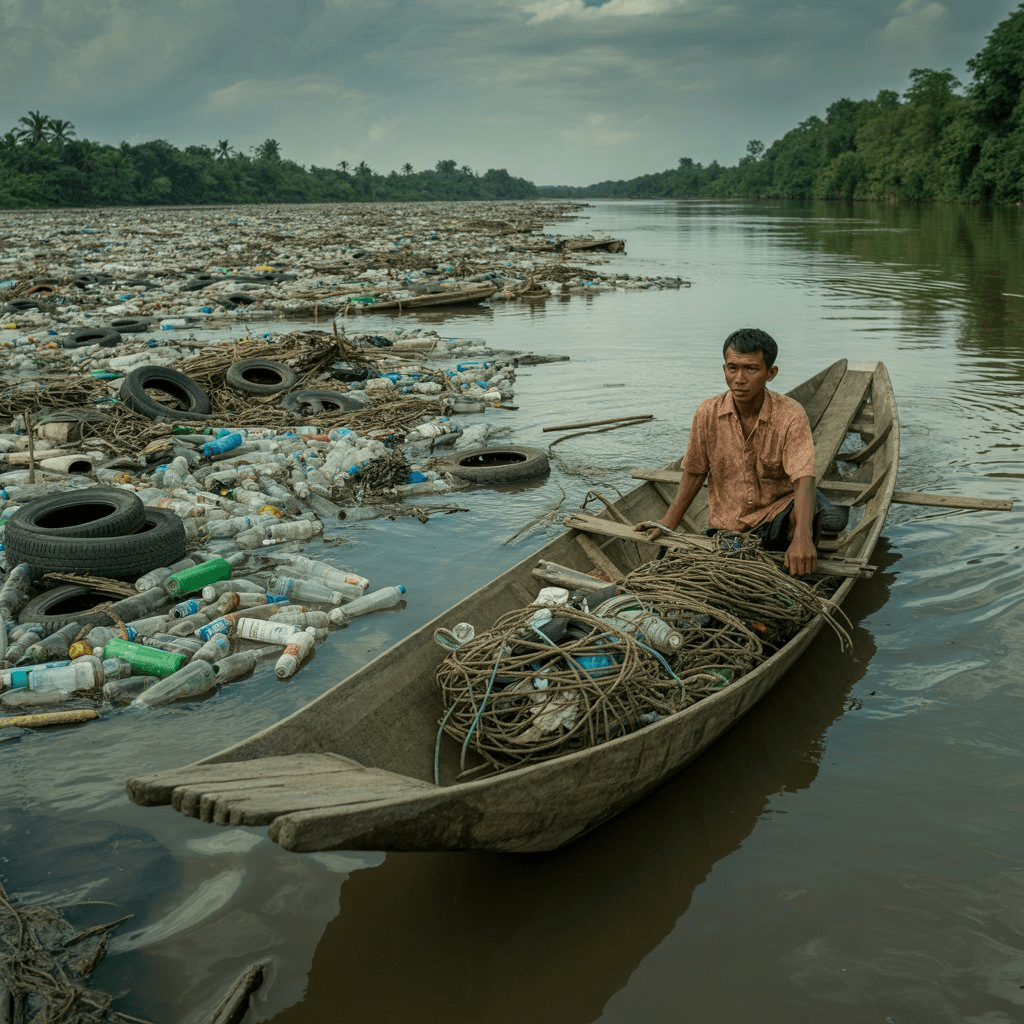
Additionally, plastic pollution has a significant economic impact affecting industries like tourism, fisheries, and shipping. When beaches and waterways become littered with plastic waste, they lose their appeal to visitors, causing a drop in tourism and reducing the profit that local communities and businesses rely on. In fisheries, the effects of plastic pollution on marine life lead to the decline of fish stocks, which threatens the well-being of those who depend on fishing for their income. Moreover, cleaning up plastic waste is an expensive process that places a heavy financial burden on governments and local communities. This problem is especially challenging in developing countries, where waste management systems are often limited or poorly equipped to handle the issue. The economic costs of plastic pollution emphasize the need for countries to work together and come up with creative solutions to address this growing crisis and protect both the environment and the global economy.

Figure 5. Sustainable Packaging (Source: surfrider.org)
Addressing plastic pollution requires numerous approaches involving governments, industries, and people. Policies such as bans on single-use plastics, incentives for recycling, and the development of biodegradable alternatives are important steps forward. Public awareness campaigns can also play a crucial role in changing people’s behavior, encouraging people to reduce plastic use and properly dispose of waste. Ultimately, solving the plastic pollution crisis demands a shift toward a circular economy, where resources are reused and recycled, minimizing waste and preserving the environment for future generations.
References
Charles Moore. “Plastic Pollution”, Britannica, https://www.britannica.com/science/plastic-pollution.
United States Environmental Protection Agency. “Impacts of Plastic Pollution”, April 23, 2024, https://www.epa.gov/plastics/impacts-plastic-pollution.
Laura Parker. “The World’s Plastic Pollution Crisis Explained”, National Geographic, https://www.nationalgeographic.com/environment/article/plastic-pollution
 The Environment Magazine
Leave a comment