
Sophie Tong
The Dorris Eaton School, San Ramon, CA 94583
With society advancing every year, there are hardly any places left with a peaceful, nature-focused style of life. However, over the last summer, I visited Yuanyang county, a rare exception to this trend, in the Chinese province of Yunnan. There, people can escape the hustle-bustle of modern society, and seclude back to a more tranquil lifestyle.

Figure 1. Terraced rice paddies in Yuanyang, Yunnan province, are considered a man-made wonder. (Source: chinadaily.com )
Cascading down the Ailao mountains, the Honghe Hani Rice Terraces cover southern Yunnan, painting it into a colorful masterpiece. These rice terraces produce the area’s main crop, red rice. Their environment is a continuous cycle of four elements: the forest, villages, terraced fields, and water. When it rains, droplets hit the mountains, later dripping down into the rice terraces. The rainwater, filled with nutrients from the forests, fertilizes the rice paddies and then runs down into the Honghe River. There, it evaporates and creates clouds, which starts the cycle all over again. Thus, it is no wonder that Yuanyang is a place protected within the Measures for Conservation and Management of World Cultural Heritage Sites.

Figure 2. Diagram of the cycle of four elements
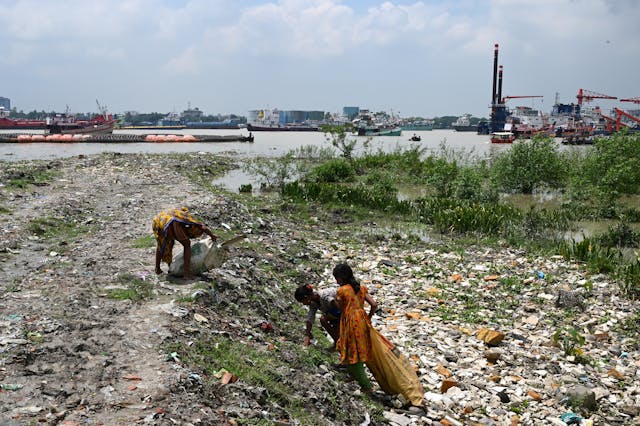
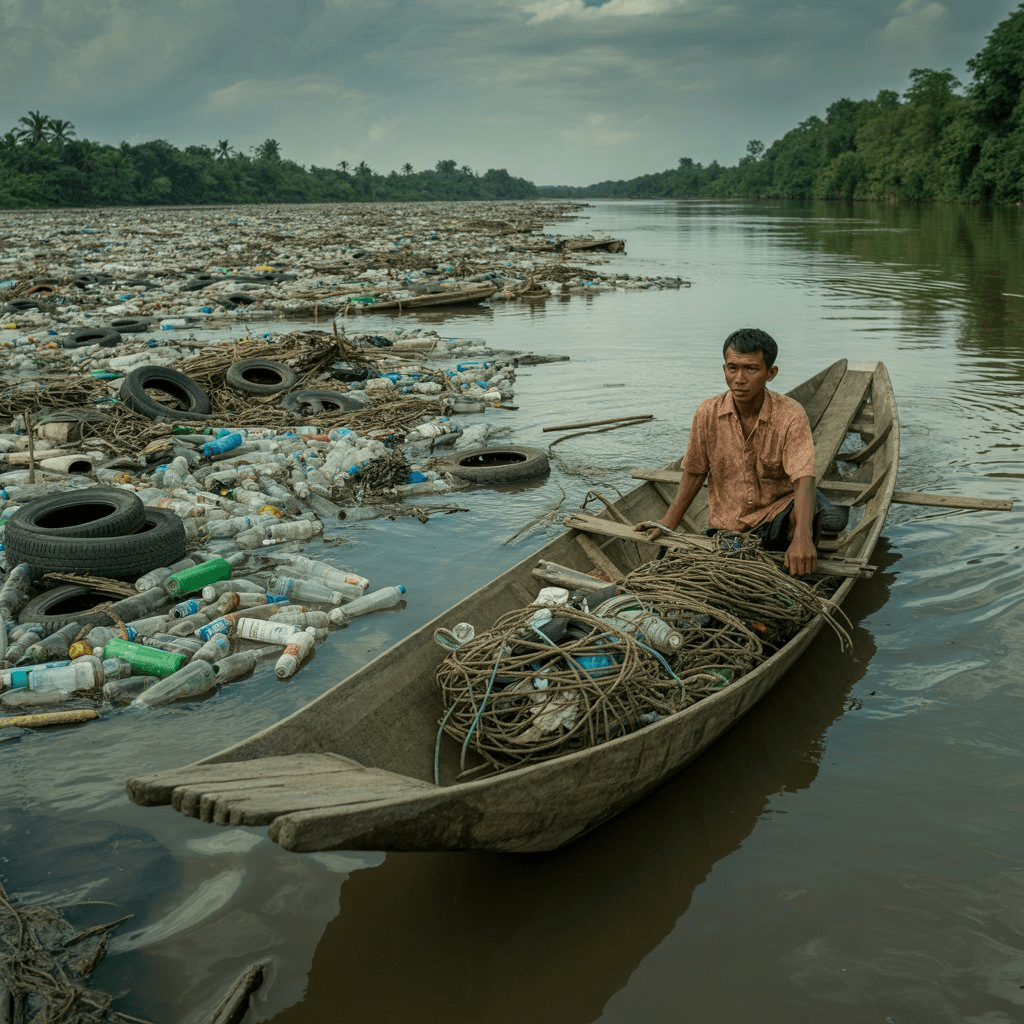
The Hani people use the stream that runs from the mountains down to the terraces to wash clothes and clean food. The Hani live as one with nature and that’s why Yuanyang is also considered an UNESCO World Heritage Site. However, as this forest oasis becomes more and more exposed to the outside world, things have been changing. The people there have started to litter and leave garbage on the ground. For example, I noticed people throwing plastic bags and bottles on the floor. Most of them did not sort garbage into compost, landfill, and recyclable sections. I believe this is mostly because they have not been taught or educated about pollution and littering. This, for example, is a picture I took during my visit there. Trash was piled on the floor, littering the environment, and no one seemed to care.
While leaving plastic and trash on the floor may not look harmful, they can potentially be deadly to the surrounding ecosystem. Garbage dumped on the floor can release microplastics that modify soil, preventing plants from growing. Plastic bottles and rings may also be ingested by nearby animals, eventually killing them. Even deadlier for the Hani, however, is the possibility of trash contaminating the water supply. The Hani rely on the same water to do everything, and dirty water could lead to disease in crops, causing starvation, or sickness from drinking the water. It is important that trash stays where it belongs and doesn’t come in contact with the environment.

Figure 3. Trash pile in Yuanyang, Yunnan
Luckily, younger generations there have begun to become educated on this problem, and are taking action. Every once in a while, they gather up to patrol the villages and pick up loose garbage. It is comforting to see that young people there are picking up on this problem and doing something about it.
Taking action starts with spreading awareness, and educating people on this ever-growing problem. Just like Yunnan, we need to teach our youth to be more aware about saving the environment. We can teach them to compost and recycle, pick up trash when they see it, and not litter. And when the youth begin to take action, a ripple effect will occur, inspiring everybody else to take action as well. If a small village high up in the mountains of China can do it, why can’t we?
References
Yangfei, Z., & Yingqing, L. “County to Boost Protection Efforts.” China Daily, July 2021, https://global.chinadaily.com.cn/a/202107/08/WS60e65b08a310efa1bd6607f2.html
Centre, U. W. H. “Cultural Landscape of Honghe Hani Rice Terraces.” UNESCO World Heritage Centre.
https://whc.unesco.org/en/list/1111
 The Environment Magazine
Leave a comment